🎓 Research Takeaway • By Carla Moreno (11th Grade, St. Michael’s High School)
Are our abilities locked in by our chromosomes? Discover how testosterone, estrogen, and DNA actually talk to our brain cells—and why our daily choices can change which genes get turned on or off.
•
🔬 Primary Source: Dr. Margaret McCarthy & Dr. Arthur Arnold (Nature Neuroscience)
•
🔗 DOI: 10.1038/nn.2886
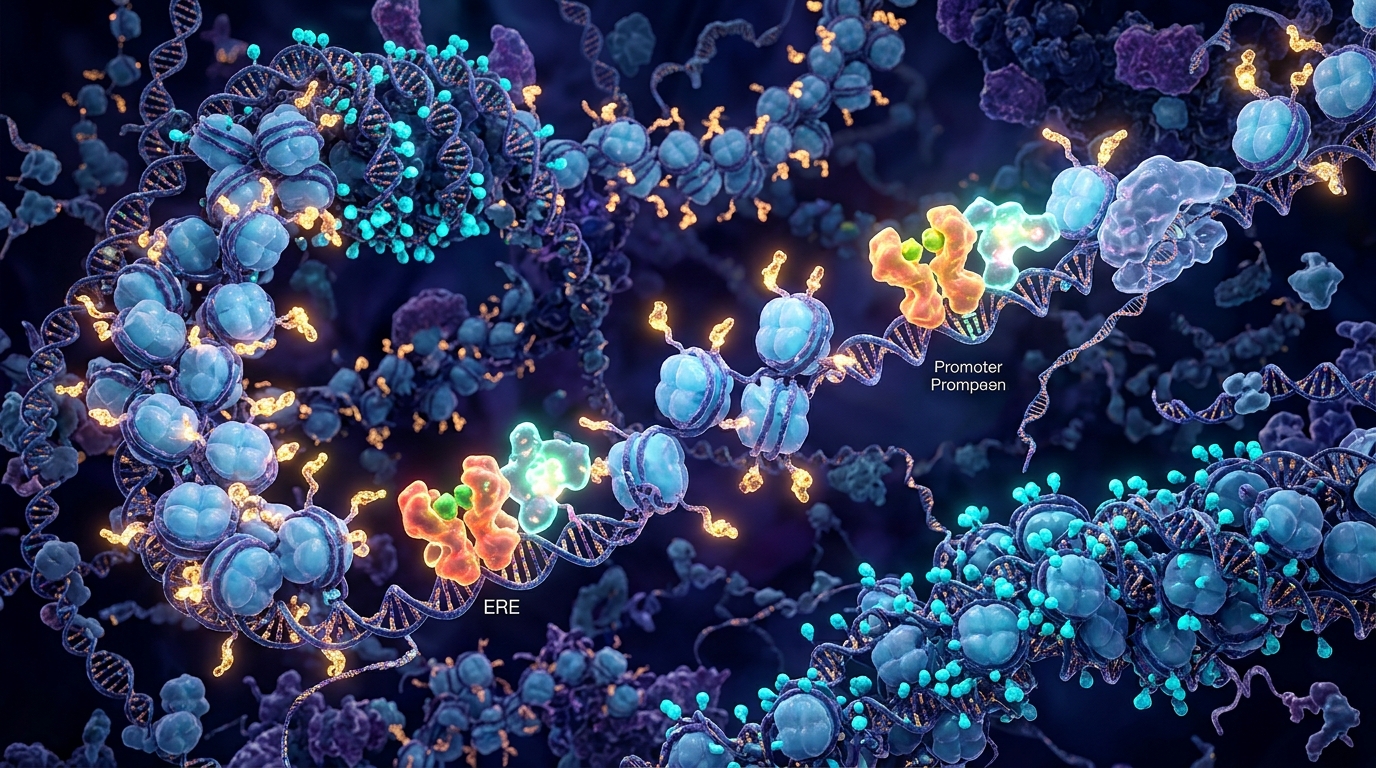
The Analogy Corner
The Electric Guitar & Amplifier Analogy
Your DNA is like the strings on an electric guitar—it provides the basic notes. But the volume, distortion, reverb, and tone come from the amplifier knobs and the pedals! Hormones, nutrition, sleep, stress, and your daily practice act like hands turning the amplifier dials. You can have the exact same guitar strings, but produce totally different music depending on how the system is tuned.
🚀 The Big Question
Do sex chromosomes (XX vs. XY) and hormones (like testosterone and estrogen) act as rigid destiny switches for our brains?
🔬 What the Scientists Actually Did
Dr. Margaret McCarthy, Dr. Arthur Arnold, and other leading molecular neuroscientists developed the ‘Four Core Genotypes’ model to separate the effects of sex chromosomes from hormones. They also studied ‘epigenetics’—how chemical tags attach to DNA to adjust gene activity in response to life experiences.
📊 What the Brain Scans Revealed
-
Genes and Hormones are Separate: An XY chromosome setup doesn’t automatically dictate how brain cells behave; hormones and cell receptors adjust dynamically. -
Hormone Receptors Vary in Every Person: Having a certain level of testosterone or estrogen doesn’t matter if cell receptors aren’t tuned to receive it. Receptor density varies widely from person to person. -
Epigenetics (The Bookmarks of Life): When you exercise, study, or experience stress, your body places tiny chemical tags (like bookmarks) on your DNA that tell your brain cells to make more or fewer proteins. Your environment talks directly to your genome!
🛑 Brain Myth Buster
Myth: Testosterone makes boys naturally aggressive and estrogen makes girls naturally nurturing.
Fact: Hormones influence energy and metabolism, but human behavior is shaped primarily by social context, empathy, values, and decision-making in the cortex.
Myth: Your genes fix your brain capacity permanently at birth.
Fact: Epigenetics shows that learning, healthy habits, and social support actively remodel how your genes express themselves throughout your life.
Try This in Class or at Home!
Discussion Question: If two identical twins have the exact same DNA, but one twin practices basketball 3 hours every day while the other practices chess, will their brains look identical after 5 years? Why or why not?
📖 Brain Words in Plain English
- Epigenetics
- Changes in gene activity caused by environmental factors (like diet, learning, and stress) without changing the underlying DNA sequence.
- Steroid Receptors
- Proteins inside brain cells that bind with hormones (like estrogen or testosterone) to send signals into the cell nucleus.
- Chromosomes
- Thread-like structures made of DNA inside our cells. Typically, females have two X chromosomes (XX) and males have one X and one Y (XY).
📚 Original Peer-Reviewed Publication
Citation: Dr. Margaret McCarthy & Dr. Arthur Arnold (Nature Neuroscience)
Persistent Identifier: https://doi.org/10.1038/nn.2886
Curated By: Carla Moreno, 11th Grade Student, St. Michael’s High School, Niagara Falls, Canada
Open Science License: CC BY 4.0 (Educational Attribution)
Leave a Reply