🎓 Research Takeaway • By Carla Moreno (11th Grade, St. Michael’s High School)
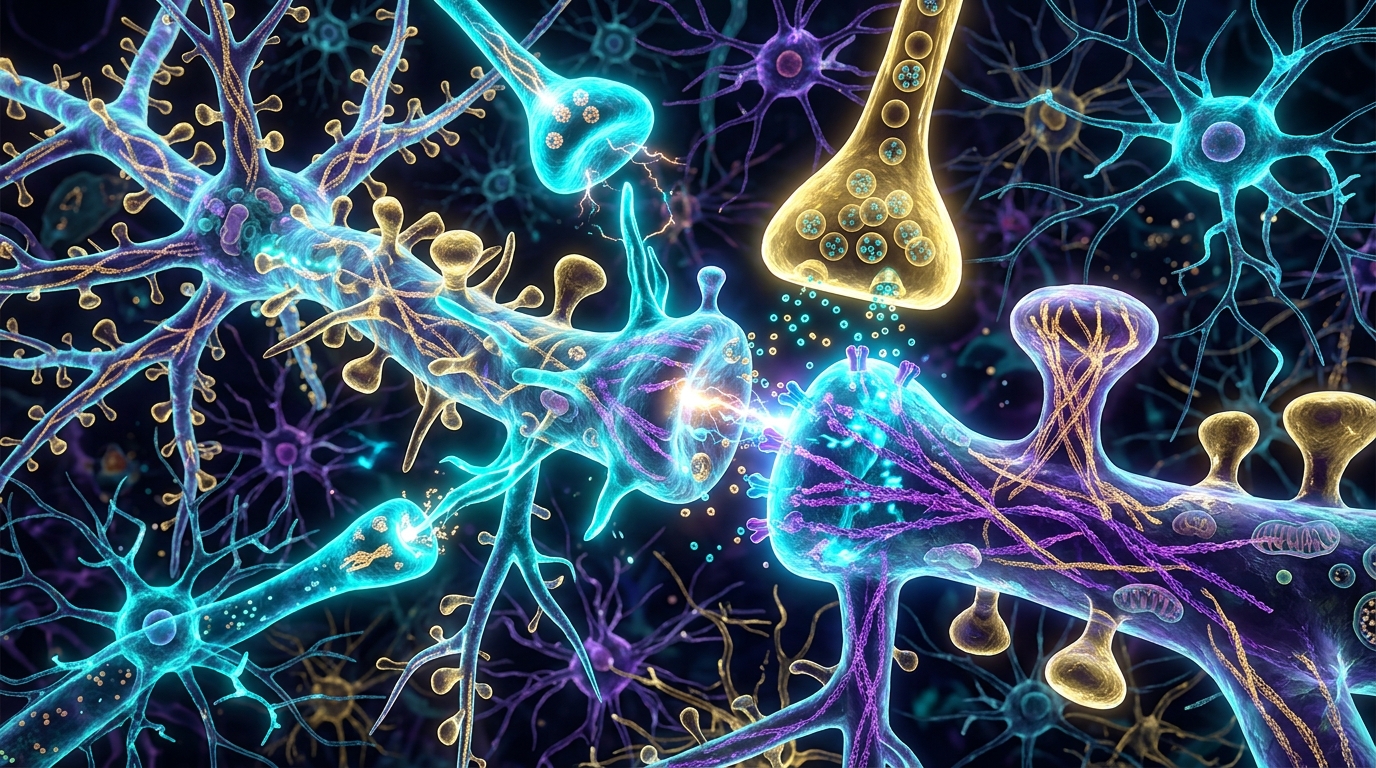
Did you know your brain changes shape every time you learn something new? It’s called neuroplasticity! Whether you’re playing sports, coding, or learning guitar, your daily habits sculpt your neural pathways.
•
🔬 Primary Source: Dr. Gina Rippon & Dr. Cordelia Fine (The Gendered Brain & Neuroplasticity)
•
🔗 DOI: 10.1037/a0029864
The Analogy Corner
The Modeling Clay & Gym Workout Analogy
If you lift weights at the gym, your arm muscles grow stronger and denser. If you stop, they return to normal. Your brain does the exact same thing! Think of your brain as a tub of fresh modeling clay. Every time you play an instrument, solve a math puzzle, or practice a skateboard trick, you are molding and strengthening physical neural cables inside your head. You aren’t stuck with the brain you were born with—you build it every day!
🚀 The Big Question
Why do some people think boys are naturally better at building things or girls are naturally better at writing? Is it biology, or is it practice?
🔬 What the Scientists Actually Did
Neuroscientists studied people learning new skills—from London taxi drivers memorizing city maps to students playing 3D video games for 10 hours. They used MRI scanners to take ‘before and after’ scans of their brains.
📊 What the Brain Scans Revealed
-
Dendritic Spines Grow in Hours: When you practice something new, your neurons literally sprout microscopic branches called dendritic spines to create new synaptic highways. -
The Video Game Experiment: When students who had never played 3D action video games (both boys and girls) were asked to play for just two weeks, their spatial brain networks expanded equally! The difference wasn’t gender—it was just practice. -
Stereotype Threat: When girls are told ‘girls aren’t good at math’ right before a test, it triggers anxiety that takes up valuable brain bandwidth. When researchers remove that stereotype, girls score just as high as boys!
🛑 Brain Myth Buster
Myth: If you’re not naturally good at something in school, your brain isn’t wired for it.
Fact: That’s completely false! The brain has tremendous neuroplasticity, especially in your teenage years. Any skill can be strengthened with practice.
Myth: Boys’ brains naturally like blue and trucks, while girls’ brains naturally like pink and dolls.
Fact: 100 years ago in North America, pink was considered a strong color for boys and blue was considered delicate for girls! Brain preferences are shaped by culture and toys, not biology.
Try This in Class or at Home!
Brain Workout Challenge: Pick one skill you think you’re ‘bad at’ (like drawing, juggling, or mental math). Spend 10 minutes a day practicing it for two weeks. Notice how quickly your brain rewires itself to make it feel easier!
📖 Brain Words in Plain English
- Neuroplasticity
- The brain’s incredible ability to physically reorganize itself by forming new neural connections throughout your entire life.
- Synapse
- The tiny microscopic gap between two neurons where electrical and chemical signals pass from one cell to the next.
- Stereotype Threat
- The mental stress and distraction caused when someone worries they might confirm a negative stereotype about their group.
📚 Original Peer-Reviewed Publication
Citation: Dr. Gina Rippon & Dr. Cordelia Fine (The Gendered Brain & Neuroplasticity)
Persistent Identifier: https://doi.org/10.1037/a0029864
Curated By: Carla Moreno, 11th Grade Student, St. Michael’s High School, Niagara Falls, Canada
Open Science License: CC BY 4.0 (Educational Attribution)
Leave a Reply